Breaking the Skill Bottleneck in Bookkeeping: Is It Imposter Syndrome or a Skills Gap?
May 19, 2026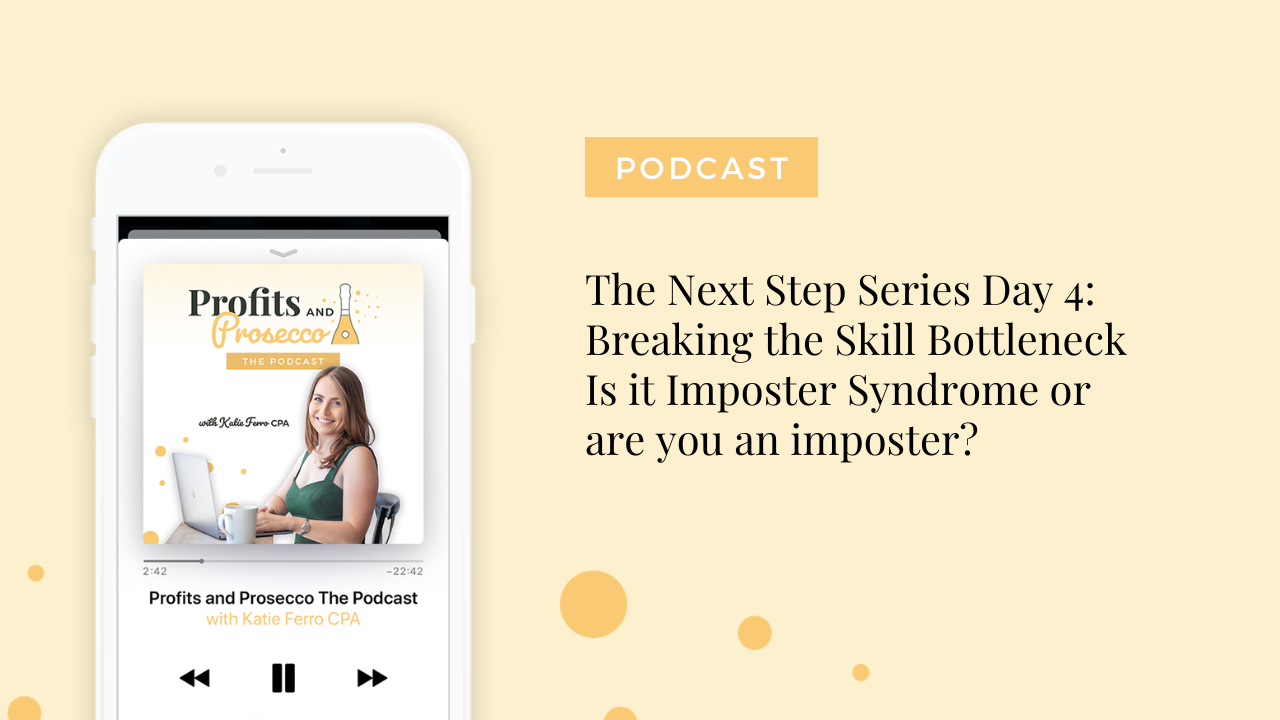
I think there’s a conversation more people need to hear when it comes to starting a bookkeeping business, especially if you’ve been feeling stuck, doubting yourself, or wondering whether you’re actually ready to do this work. A lot of people call it imposter syndrome. They think they just need more confidence. They think they need to believe in themselves more before they finally start taking action. But sometimes, if we’re being honest, it’s not imposter syndrome. Sometimes it’s a skills gap.
And honestly, I think that’s good news because skills gaps can be closed.
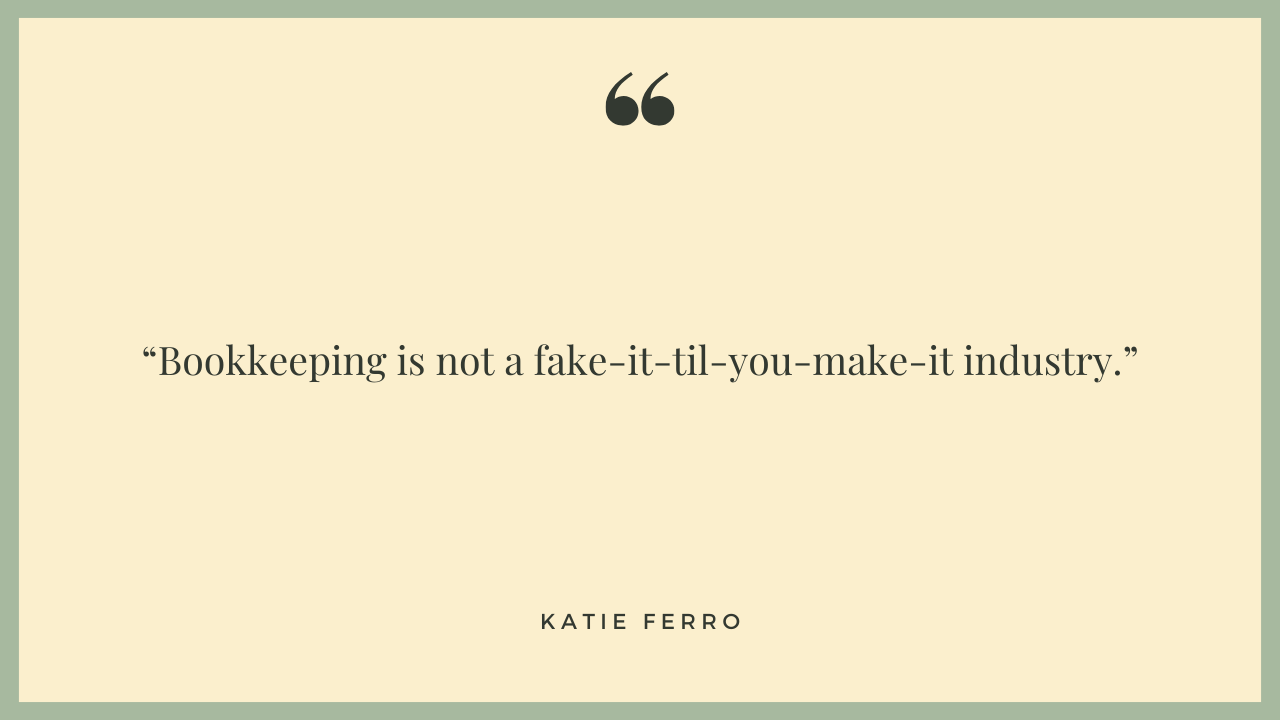
If you feel fear, hesitation, or inaction around bookkeeping, that does not automatically mean you’re incapable. A lot of times, it means your brain recognizes there’s probably something missing. That awareness is what creates the fear. That awareness is what creates the hesitation. That awareness is usually what creates the inaction. Your brain knows. And honestly, I think that’s a good thing because bookkeeping is not a fake-it-til-you-make-it industry.
You are working with real businesses, real financials, real payroll, real tax situations, and real consequences. This is not one of those industries where you can confidently bluff your way through things and hope nobody notices. Confidence is built on competence. I repeat that over and over because I think people need to hear it. Confidence comes after competence, not before it.
In this blog post, I’m talking about the difference between imposter syndrome and a real skills gap, why confidence is built on competence, and the three-step process I believe actually helps people become confident in bookkeeping: learning, shadowing, and applying. I’m also sharing why I created BABS, why bookkeeping skills matter more than mindset alone, and how building efficient systems can help you create a bookkeeping business that actually supports your life.
The Difference Between Imposter Syndrome and a Skills Gap
I think imposter syndrome has become this catch-all phrase people use anytime they feel uncomfortable or unsure. And yes, there are moments where people are fully capable but still doubt themselves. That absolutely happens. But there are also situations where someone feels anxious because they genuinely do not understand the work well enough yet, and those are two very different things.
If you’re trying to become a bookkeeper but you do not fully understand reconciliations, financial statements, payroll basics, or the bookkeeping process, then of course you’re going to feel nervous taking on a client. That is not your intuition telling you to quit. That is awareness. And honestly, awareness is not a bad thing. I would much rather someone recognize there’s a gap than blindly jump into handling client financials without understanding what they’re doing.
The problem is that many people try to solve the discomfort emotionally instead of technically. They try to fix it with motivation. They try to fix it with affirmations. They try to convince themselves they’re confident. But bookkeeping is a technical skill, and the solution is usually building more competence. Again, confidence is built on competence. When you start understanding the work more deeply, you naturally begin trusting yourself more. You stop second-guessing yourself as much. You stop panicking every time something looks unfamiliar. That’s how confidence actually develops.
And again, the good news is that skills gaps can be closed. That’s what I want people to hear. A skills gap is not a permanent condition. It’s not proof that you’re incapable. It’s just something that needs to be worked on.
The Three-Step Process That Builds Confidence
One of the biggest things I talked about is the three-step process I believe actually helps people become confident in bookkeeping: learning, shadowing, and applying.
Step 1: Learning the Accounting Basics That Actually Matter
The first step is learning. You need to understand the accounting basics that actually matter. You need to understand debits and credits, reconciliations, financial statements, payroll basics, and how transactions flow through the accounting system.
A lot of people want shortcuts because accounting concepts can feel overwhelming at first. They want the software to think for them. They want automation to replace understanding. But software is only as good as the person using it. If you do not understand why something is happening, eventually you’re going to hit a situation where you completely freeze because you cannot troubleshoot the issue.
That’s why I focus so heavily on teaching concepts. I do not want people memorizing steps without understanding the reasoning behind those steps. Eventually something changes. A reconciliation does not tie out. Payroll gets complicated. A client situation becomes messy. And if all you learned was how to click buttons, you’re going to feel completely lost.
Understanding the “why” behind the work matters because understanding creates confidence. When you understand why something is happening, you stop relying on memorization and start actually thinking like a bookkeeper.
Step 2: Shadowing Real-World Bookkeeping Work
The second step is shadowing, and this is where you start seeing what bookkeeping actually looks like inside real businesses. You see workflows, cleanup work, problem-solving, and client communication happening in real time. You see how experienced bookkeepers think through problems. You see what happens when things get messy. And honestly, that exposure matters so much.
There’s a huge difference between learning bookkeeping in theory and actually seeing how the work functions in the real world. I think this is one of the reasons so many people still feel stuck after taking bookkeeping courses. They learned information, but they never really saw the work happening inside an actual business.
When you start watching real bookkeeping work happen, things start clicking differently. You begin understanding how the pieces connect. You stop seeing bookkeeping as isolated tasks and start understanding the bigger picture.
Step 3: Applying the Skills Yourself
Then comes applying. At some point, you have to do the work yourself. You have to reconcile accounts, review transactions, communicate with clients, and solve problems. That’s where confidence actually starts getting built because now you’re actively doing the work instead of just learning about it.
You stop wondering whether you can do it because you start realizing you actually can. You build evidence for yourself through repetition and practice. The more situations you work through, the more competent you become. And again, confidence is built on competence.
I think this is the part people try to skip because applying feels uncomfortable at first. Of course it does. Every new skill feels uncomfortable in the beginning. But you cannot build confidence without experience, and you cannot build experience without applying what you’ve learned.
Why I Created BABS
One of the reasons I created BABS is because I spent years thinking about how to ethically teach bookkeeping. I did not want to create a program that simply made people feel motivated for a few days without actually preparing them for the responsibility of this work. I think there’s a lot of messaging online that oversimplifies bookkeeping and makes it sound like easy money.
People are told they can watch a few videos and immediately start charging clients, but I just do not agree with that approach. Again, bookkeeping is not a fake-it-til-you-make-it industry. I wanted BABS to follow the real-world process that helped me become a bookkeeper. That process included learning accounting fundamentals, seeing the work in real business situations, and then actually operating a bookkeeping business myself.
I wanted people to understand not just how to do bookkeeping tasks, but why the work matters. I wanted them to understand the bookkeeping process, understand tax, understand workflows, and understand how to think critically through problems instead of panicking every time something unexpected came up.
That’s why the program focuses so heavily on practical understanding. We talk about onboarding clients, reconciliations, payroll situations, bookkeeping workflows, and communication with business owners. Because bookkeeping is not just categorizing transactions. You are helping business owners understand their finances and make decisions. That requires real competence.
Why Efficiency Matters in Bookkeeping
Another thing I talked about a lot is efficiency, because efficiency is what protects your profits. You can technically know how to do bookkeeping and still struggle to build a scalable business if your systems are inefficient. If every client takes you forever because your workflows are disorganized, your profitability drops quickly.
That’s why systems matter so much. The fewer clicks it takes to get from raw data to reconciled books, the better. That does not mean cutting corners. It means understanding the process deeply enough that you can simplify it without sacrificing quality.
That’s one of the reasons I love Xero. I genuinely think it creates cleaner workflows and helps bookkeepers operate more efficiently. Simpler systems create more capacity. Cleaner workflows reduce stress. Efficient processes protect your time.
And honestly, I think that matters more than people realize because the goal is not to build a business that completely burns you out. The goal is to build a business that supports your life. The goal is to build something scalable and sustainable.

Skills Gaps Can Be Closed
One of the coolest things I get to witness is what happens when people stop obsessing over confidence and start focusing on competence instead. I’ve watched students go from terrified to take discovery calls to confidently signing clients. I’ve watched students who were scared to even open accounting software become fully capable bookkeepers managing client accounts every single month.
And honestly, what changes is not that they suddenly become fearless. What changes is that they understand the work better. They trust themselves more because they’ve built competence. They’ve practiced. They’ve worked through problems. They’ve seen situations play out in real time.
That’s why I keep repeating this message over and over: skills gaps can be closed. Skills gaps can be closed. Skills gaps can be closed.
If you are willing to learn, shadow, apply, and keep practicing, you can absolutely build this skill set. You do not need to become perfect overnight, and you do not need to know everything immediately. But you do need to stop expecting confidence to appear before competence because confidence is built on competence.
If this conversation resonated with you, I really encourage you to listen to the full podcast episode. We go much deeper into the skill bottleneck, imposter syndrome, bookkeeping skills, systems, efficiency, and what it actually takes to become confident as a bookkeeper. And if you’ve been sitting there wondering whether you’re really capable of doing this, I hope this episode helps you realize that maybe you do not need to become a different person. Maybe you just need to close the skills gap.
EPISODE RESOURCES:
If you want to take the next step, go to katieferro.com/step.
Sick of imposter syndrome keeping you stuck? Join the new + improved BECOME A BOOKKEEPER now: https://www.katieferro.com/become
Learn how to take your bookkeeping skills and turn them into a business that can replace or surpass your corporate salary, give you more presence in your life, and let you support your clients without burning out inside Life by the Books (LIBBY): https://www.katieferro.com/life
Want a peek behind the curtain into LIBBY, my program all about what it really takes to have a simple and scalable (and successful) bookkeeping business? Get access to my free, on-demand four-part series, 6 Secrets to a Simple, Scalable Bookkeeping Business: www.katieferro.com/6-secrets
Season 2 of Profits & Prosecco is HERE! Kick off your newest podcast addiction (or celebrate its return!) and listen to Episode 1 now: https://open.spotify.com/show/4dB0ZE8JaxqrkImm3Ifxrb
CONNECT WITH KATIE:
Want to get notified when I’m about to go live? Subscribe to the Profits and Prosecco YouTube Channel: https://www.youtube.com/@profitsandprosecco
Website: https://www.katieferro.com/
For first dibs (and the best prices!) on new offers from me, follow me on Instagram, then subscribe to my email list:
IG: www.instagram.com/orderlyaccountingbykatie
Email Opt In: www.katieferro.com/email